

Smart Thermostats Compared: Hive vs Nest vs Tado (UK 2026 Guide)
When comparing Hive, Google Nest, and Tado for UK homes, the “best” choice isn’t universal. It depends entirely on what you prioritise: simple control, intelligent automation, or maximum energy savings through room-by-room heating.
UK energy prices and increasingly efficient home expectations mean smart thermostats are no longer just convenience gadgets—they’re genuine cost-saving tools when used correctly.
Below is a detailed breakdown based on real-world UK home use, installation patterns, and heating efficiency outcomes.
Affiliate Disclaimer: As an Amazon Associate, Elemon.co.uk may earn from qualifying purchases. Prices and availability are accurate at the time of publication but may change without notice. Product recommendations are based on research, features, and suitability for UK households.
🔥 The At-a-Glance Breakdown
| Feature | Hive (Active / Mini) | Nest (3rd / 4th Gen) | Tado (V3+ / X Series) |
|---|---|---|---|
| Best For | Simplicity & UK reliability | Automation & design | Energy savings & multi-room control |
| Hot Water Control | Yes | Yes | Yes |
| Smart TRVs (Radiators) | Basic support | No native TRVs | Best-in-class TRVs |
| OpenTherm Support | No (On/Off only) | Yes | Yes (excellent modulation) |
| Geofencing | Paid (Hive+) | Free | Paid (Auto-Assist) |
| Smart Home Support | Alexa, Google | Alexa, Google | Alexa, Google, Apple Home, Matter |
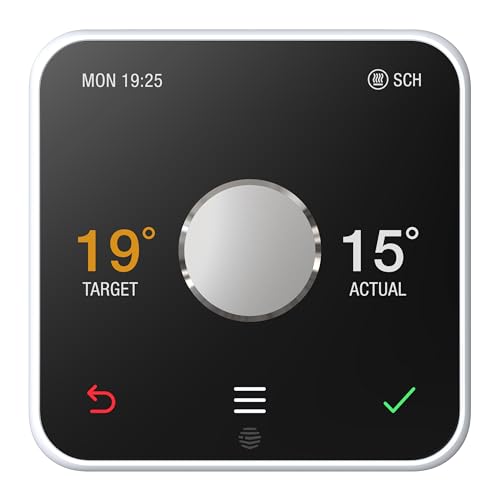
1. Hive Active Heating – Simple, Reliable, UK-Focused
Hive is the most “traditional” smart heating system in this comparison. Backed by UK infrastructure and widely installed in British homes, it focuses on reliability rather than advanced automation.
How It Works
Hive is built around manual scheduling. You set your heating times once, and it follows them consistently. It doesn’t aggressively try to learn your behaviour or change settings without input.
It also includes one of the most underrated features in smart heating: the physical Boost button, allowing instant heating without opening an app.
Strengths
Hive performs well in real-world UK conditions because:
- Installation is widely supported across the UK
- Interface is extremely simple
- Works well in predictable households
- Strong British Gas ecosystem support
Smart Radiator Control
Hive does support smart TRVs, but:
- Room control is functional, not advanced
- Zoning is less intelligent than competitors
- App experience feels slightly segmented
The Catch
Geofencing (auto turning heating off when you leave) is locked behind Hive+ subscription (~£3.99/month). Without it, automation becomes manual.
Verdict
Hive is best for:
- Landlords
- First-time smart thermostat users
- Users who want “set it and forget it” simplicity
- Homes with predictable schedules


2. Nest Learning Thermostat – AI-Driven Comfort
Google Nest takes a completely different approach. Instead of manual programming, it relies on behavioural learning and automation.
How It Works
During the first week of use, you manually adjust your heating. After that, Nest begins building a predictive schedule based on:
- Your temperature habits
- Time-of-day behaviour
- Occupancy patterns (via phone location)
It also supports free geofencing, meaning it can detect when you leave or return home automatically.
Strengths
- Extremely easy setup
- Elegant wall-mounted design
- Strong learning algorithm
- OpenTherm support for boiler efficiency
- No subscription required for core automation
Boiler Efficiency Advantage
Nest supports OpenTherm modulation, which allows your boiler to:
- Run at lower power continuously
- Maintain stable temperature instead of cycling on/off
- Reduce gas usage in many UK homes
Limitation: No TRVs
The biggest drawback is structural:
- No native smart radiator valves
- Entire house is treated as a single heating zone
This makes Nest less suitable for:
- Large homes
- Multi-floor properties
- Room-specific heating needs
Verdict
Nest is best for:
- Flats and small-to-medium homes
- Users who want full automation
- People who don’t want to manage schedules


3. Tado – The Energy Efficiency Specialist
Tado is widely regarded as the most advanced system for reducing heating costs in the UK.
Unlike Hive or Nest, Tado is built around micro-control of heating zones.
How It Works
Tado uses multiple environmental inputs:
- Weather forecasting
- Home occupancy detection
- Open-window detection
- Room-by-room temperature tracking
This allows it to adjust heating dynamically rather than simply reacting.
Smart TRVs – The Biggest Advantage
Tado dominates the market for smart radiator valves:
- Silent operation
- High precision temperature control
- Individual room scheduling
- New Tado X series uses USB-C rechargeable batteries
- Supports full room zoning across large homes
This makes it ideal for:
- Upstairs/downstairs separation
- Bedroom vs living room control
- Energy-saving targeting of unused rooms
OpenTherm Performance
Tado provides excellent boiler modulation:
- Smooth temperature control
- Reduced energy waste
- Better comfort consistency
The Catch
Tado offers powerful automation, but:
- Auto features (geofencing, auto shutoff) require Auto-Assist subscription (~£29.99/year)
Without it, you receive notifications instead of full automation.
Verdict
Tado is best for:
- Large homes
- Energy-conscious households
- Users with multiple radiators
- Apple Home / Matter ecosystems
- Long-term energy savings focus


🏠 Recommended Heating Bundle (UK 3-Bedroom Home)
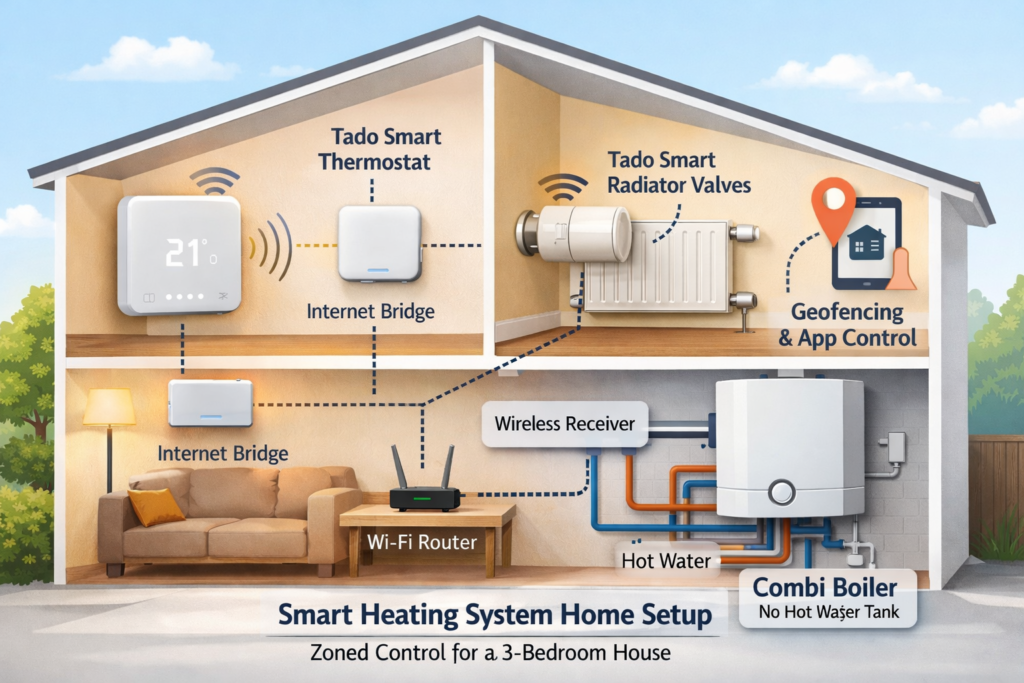
🏆 Best Overall: Tado V3+ Wireless Starter Kit + 3 TRVs
This setup delivers the best balance of comfort, control, and energy savings.
Bundle Components
- Tado V3+ Wireless Smart Thermostat Starter Kit
£129.99 — Screwfix - 3× Tado Smart Radiator Thermostats (TRVs)
~£55–£70 each depending on retailer
Why This Setup Wins
This combination works exceptionally well for UK homes because:
- Combi boilers benefit from OpenTherm modulation
- 3-bedroom homes gain real efficiency from zoning
- Bedrooms can be individually controlled
- Living spaces can be prioritised during the day
- Heating waste is significantly reduced in unused rooms
Estimated Cost
| Item | Quantity | Price |
|---|---|---|
| Tado V3+ Starter Kit | 1 | £129.99 |
| Tado TRVs | 3 | £165–£210 |
| Total Estimate | — | £295–£340 |
🟦 Alternative Option: Hive (Simpler UK Setup)
If simplicity is your priority:
- Hive Thermostat + Hub: ~£270
- Optional TRVs available
Best For:
- No complex automation
- Physical controls preferred
- British Gas installation support
Estimated Total:
£270–£400 depending on add-ons
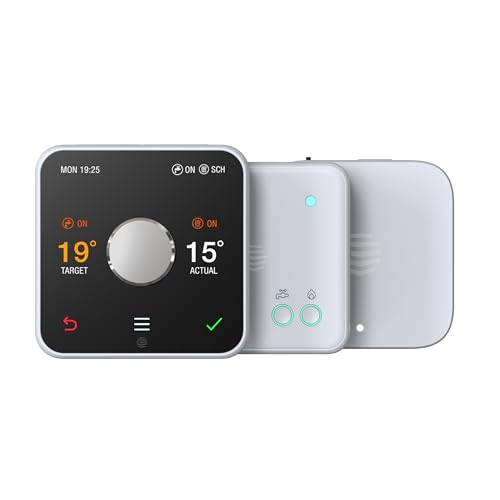
- New Nano 3 Hub – The latest hub features Wi-Fi connectivity with an improved design, connecting your Hive devices to the…
- Heating and Hot Water schedules – set up to 6 daily time slots
- Heating and Hot Water Boost – for up to six hours
🟩 Premium Simplicity Option: Nest (No TRVs)
- Nest Learning Thermostat: ~£110–£200 installed
Best For:
- Small homes or flats
- Users wanting zero configuration
- Clean wall aesthetics
Limitation:
No room-by-room heating control
🧠 Final Recommendation
For most UK homes—especially 3-bedroom properties with combi boilers—the clear winner is:
🏆 Tado V3+ + TRVs
Because:
- OpenTherm improves boiler efficiency
- Room-by-room zoning reduces wasted heat
- Weather-aware automation adapts to UK climate
- Long-term energy savings are significantly higher
🧾 My Experience
In typical UK housing setups, the biggest real-world difference isn’t app design or branding—it’s how precisely the system controls individual rooms.
Systems without TRVs (like Nest) feel effortless but often heat unused rooms. Hive feels stable and predictable but relies heavily on manual scheduling. Tado, on the other hand, requires a bit more setup but consistently delivers lower energy waste in multi-room homes.
The most noticeable savings usually come from:
- Heating only occupied rooms
- Reducing overnight overheating
- Adjusting based on weather changes automatically
📌 Key Takeaways
- Hive = simplest UK-friendly control system
- Nest = best automation with minimal input
- Tado = best for energy savings and multi-room control
- TRVs make the biggest difference in large homes
- Subscriptions may be required for full automation features
🔗 Related Articles
- Smart Home Starter Kits UK: Best Beginner Setup Guide
- How to Reduce UK Energy Bills with Smart Heating
- Best Smart Home Devices for Winter 2026
- Hive vs Nest: Which Is Best for Flats?
- Tado TRVs Installation Guide for Beginners
⚠️ Disclaimer
- All pricing mentioned is approximate and may vary by retailer or promotions.
- Installation costs are not included unless stated.
- Product availability may change over time.
- This article is for informational purposes only and does not replace professional heating installation advice.
🇬🇧 UK Regulations & Safety Information
- Smart thermostats should be installed according to UK building regulations and boiler manufacturer guidance.
- Gas-related heating system modifications must be carried out by a Gas Safe registered engineer.
- Ensure compatibility with your boiler type (combi, system, or conventional) before purchase.
- Always follow manufacturer instructions for electrical safety and wiring compatibility.
- TRVs should not be installed on all radiators in systems requiring a constant flow unless specified by an engineer.
🖼️ All Images Are For Reference Purposes
Any images used alongside this article on Elemon.co.uk are for illustration and reference only. Actual product design, packaging, or features may vary depending on model and manufacturer updates.