
How to Choose the Right Power Tools for Your Home (UK 2026): The Ultimate Smart Buying Guide
Welcome to Elemon.co.uk — Products of Tomorrow… Today.
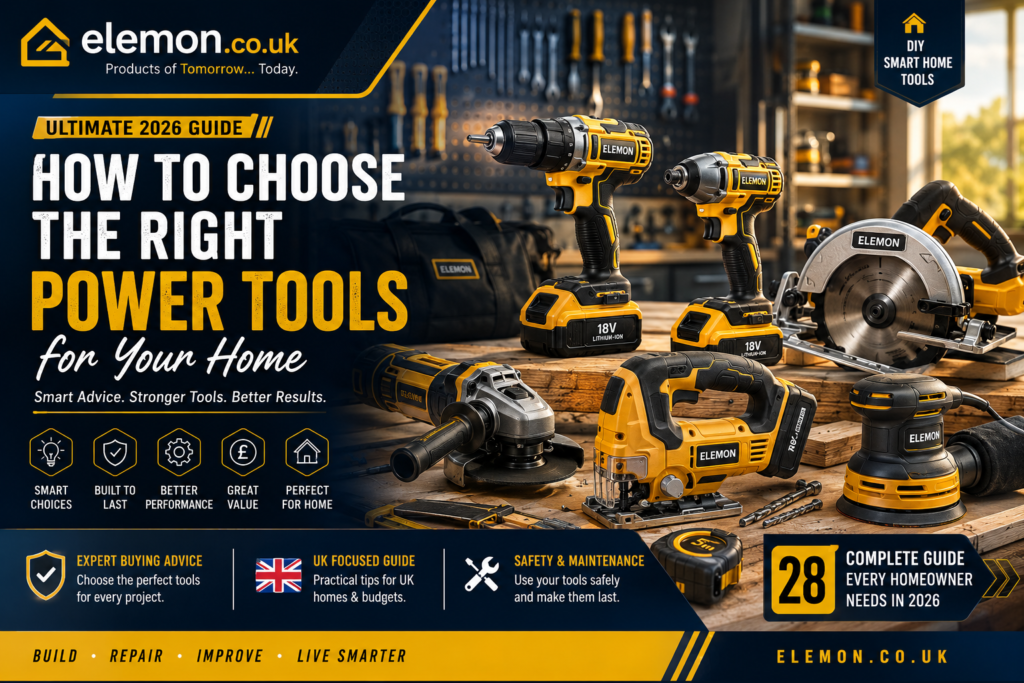
Whether you’re assembling flat-pack furniture, renovating an older British property, building a garden deck, or simply upgrading your DIY workshop, choosing the right power tools can save you hundreds—if not thousands—of pounds over the lifetime of your home.
Today’s market offers more choice than ever before. From compact cordless drill drivers to intelligent brushless systems that communicate with batteries and smartphones, modern power tools have evolved far beyond the noisy, heavy machines many homeowners remember from years ago.
Yet with dozens of manufacturers, multiple battery platforms, confusing specifications, and endless marketing claims, buying the wrong tool has become surprisingly easy.
At Elemon.co.uk, we believe buying a power tool shouldn’t feel like earning an engineering degree.
This guide has been created specifically for UK homeowners, DIY enthusiasts, first-time buyers, landlords, and anyone looking to build a reliable collection of tools without wasting money on unnecessary features.
Rather than recommending the most expensive equipment, we’ll explain how to choose tools that suit your projects, your budget, and your future plans.
Why Choosing the Right Power Tools Matters
Many people think buying power tools is simply about selecting the biggest motor or highest voltage.
In reality, the best tool is the one that matches the work you’ll actually perform.
Consider these examples:
- Installing shelves
- Hanging televisions
- Building wardrobes
- Repairing fencing
- Constructing decking
- Installing kitchens
- Drilling brick walls
- Cutting timber
- Sanding furniture
- Garden maintenance
Each task demands different levels of power, precision, runtime, and portability.
Buying too small means constant frustration.
Buying too large means carrying unnecessary weight, paying more, and owning features you’ll never use.
A smart toolkit grows alongside your skills.
Instead of purchasing everything at once, experienced DIYers gradually build around one quality battery platform, allowing every new tool to share the same batteries and chargers.
That strategy alone can save hundreds of pounds over several years.
Affiliate Disclaimer: As an Amazon Associate, Elemon.co.uk may earn a commission from qualifying purchases at no extra cost to you.
The Evolution of Modern Power Tools
The UK DIY market has changed dramatically over the last decade.
Older tools typically featured:
- Brushed motors
- Nickel-Cadmium batteries
- Short runtimes
- Heavy construction
- Long charging times
- Lower efficiency
Modern tools now include:
- Brushless motors
- High-density Lithium-Ion batteries
- Electronic torque management
- Variable speed control
- Battery monitoring
- Overheat protection
- Smart battery communication
- LED work lighting
- Compact ergonomic designs
These improvements mean today’s mid-range cordless drill often outperforms premium professional models from only ten years ago.
For homeowners, that’s excellent news.
Professional-grade performance has become far more affordable.
Before Buying Any Power Tool, Ask Yourself These Questions
One of the biggest mistakes people make is shopping before defining their needs.
Instead, ask yourself:
How often will I use it?
If you’re completing two DIY projects every year, you don’t necessarily need contractor-grade equipment.
However, if you’re renovating an entire house, investing in higher-quality tools quickly pays for itself.
What materials do I usually work with?
Different materials require completely different power levels.
| Material | Tool Requirement |
|---|---|
| MDF | Low to Medium |
| Softwood | Medium |
| Hardwood | Medium to High |
| Brick | High |
| Concrete | Very High |
| Steel | Specialist Tools |
Indoors or outdoors?
Outdoor projects often benefit from cordless systems.
Indoor workshops sometimes favour corded tools with unlimited runtime.
Do I already own batteries?
This is one of the biggest purchasing decisions.
If you already own compatible batteries, buying bare tools can dramatically reduce costs.
Will my projects become larger?
Think long term.
Many homeowners begin with simple repairs before moving on to:
- Garden rooms
- Outdoor kitchens
- Decking
- Garage conversions
- Home offices
- Kitchen renovations
Buying into a scalable battery ecosystem today makes future upgrades far cheaper.
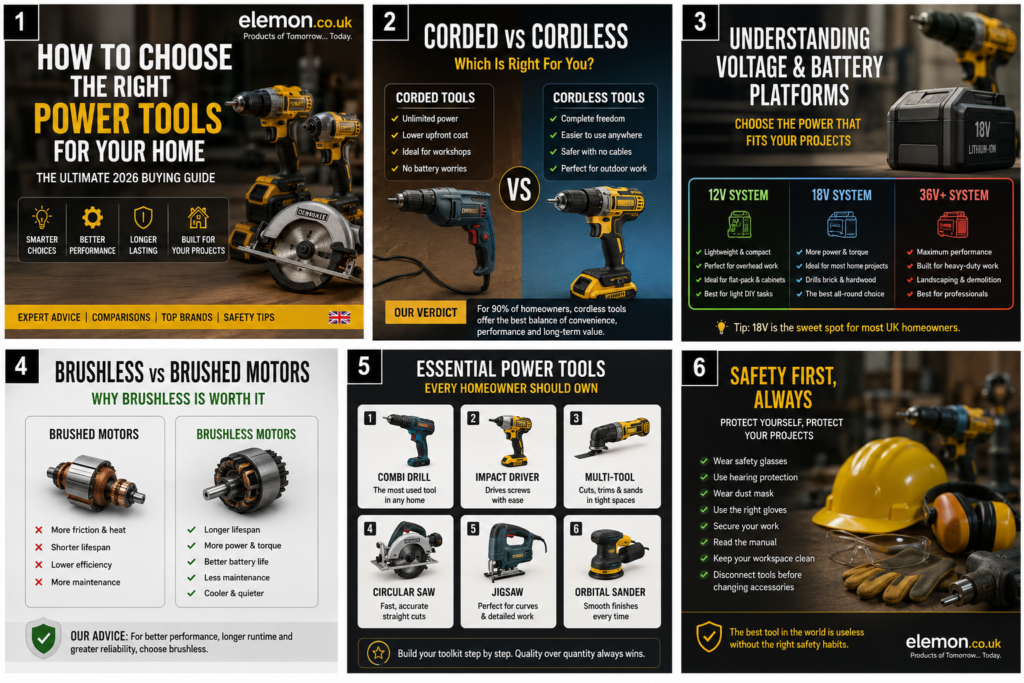
Corded vs Cordless Power Tools
One of the oldest debates in DIY remains just as relevant today.
Fortunately, modern battery technology has changed the answer.
Corded Tools
Corded tools remain excellent for heavy-duty continuous work.
Advantages
✔ Unlimited runtime
✔ Lower purchase price
✔ Consistent power output
✔ No battery maintenance
✔ Ideal for workshops
Disadvantages
✖ Extension leads
✖ Limited mobility
✖ Trip hazards
✖ Outdoor inconvenience
✖ Less practical for ladders
Best Uses
- Table saws
- Mitre saws
- Bench grinders
- Heavy demolition
- Large SDS drills
- Workshop sanders
Cordless Tools
Cordless tools now dominate both professional trades and home DIY.
Modern Lithium-Ion batteries have transformed what portable tools can achieve.
Advantages
✔ Complete portability
✔ Faster setup
✔ Safer without cables
✔ Better for outdoor work
✔ Easier storage
✔ Expanding battery ecosystems
Disadvantages
✖ Higher initial investment
✖ Batteries eventually wear out
✖ Charging required
✖ More expensive starter kits
Best Uses
- Drilling
- Driving screws
- Garden projects
- Furniture assembly
- Roofing
- Decking
- Home maintenance
Elemon Recommendation
For approximately 90% of UK homeowners, cordless tools provide the best balance between convenience, performance, and long-term value.
Reserve corded tools for heavy workshop equipment that operates continuously for extended periods.
Understanding Battery Platforms
Buying your first cordless tool is actually much bigger than buying one machine.
You’re buying into an ecosystem.
That battery may eventually power:
- Drill
- Driver
- Jigsaw
- Circular saw
- Multi-tool
- Hedge trimmer
- Leaf blower
- Angle grinder
- Router
- Work light
- Vacuum
- Radio
Some manufacturers now offer well over 250 compatible tools using a single battery platform.
Choosing wisely now prevents expensive switching later.
Understanding Voltage
Voltage determines how much power a cordless tool can deliver.
However, higher voltage doesn’t always mean better.
The correct choice depends on your work.
| Voltage | Best For |
|---|---|
| 12V | Light DIY |
| 18V / 20V Max | Most homeowners |
| 36V+ | Heavy-duty construction |
12V Systems
Ideal for:
- Furniture assembly
- Cabinet installation
- Light drilling
- Electronics
- Precision work
Advantages include:
- Lightweight
- Compact
- Comfortable overhead
- Easy storage
Perfect for:
- Flats
- Apartments
- Small workshops
18V Systems
The UK’s most popular platform.
Suitable for:
- Brick drilling
- Timber framing
- Garden construction
- Decking
- Kitchen installation
- General renovation
Offers the best balance between power and portability.
For most homeowners, an 18V platform is the ideal long-term investment.
36V and Higher
Generally intended for:
- Landscaping
- Demolition
- Concrete work
- Professional construction
Excellent performance but unnecessary for typical household repairs.
What Does Amp Hour (Ah) Mean?
Many buyers confuse voltage with battery capacity.
They’re completely different.
Think of it this way:
Voltage = Engine Power
Amp Hours = Fuel Tank
Higher Ah batteries simply run longer.
| Battery | Best Use |
|---|---|
| 2.0Ah | Light DIY |
| 3.0Ah | Everyday work |
| 4.0Ah | Most homeowners |
| 5.0Ah | Heavy projects |
| 6.0Ah+ | Professional use |
Larger batteries also increase weight.
For installing shelves all day, a lighter battery often feels far more comfortable.
For cutting decking timber, the extra runtime of a larger battery is worth carrying.
Brushless vs Brushed Motors
If there’s one feature worth paying extra for in 2026, it’s a brushless motor.
Traditional Brushed Motors
Older motors rely on carbon brushes making physical contact with moving components.
Over time this creates:
- Heat
- Friction
- Wear
- Sparks
- Reduced efficiency
Eventually the brushes require replacement.
Modern Brushless Motors
Brushless motors replace physical contact with electronic control.
Benefits include:
✔ Longer lifespan
✔ More torque
✔ Better battery life
✔ Cooler operation
✔ Less maintenance
✔ Improved efficiency
✔ Better performance under heavy loads
Many premium brushless tools also feature electronic safety systems that instantly reduce power if the bit jams, helping protect both the user and the motor.
My Experience
Over the years, I’ve learned that buying cheap power tools often ends up costing more in the long run.
Like many homeowners, I started with a budget drill purchased simply because it was inexpensive. It worked for assembling furniture, but the moment I needed to drill into brick walls or complete larger outdoor projects, its limitations became obvious. Battery life was short, the motor overheated quickly, and finding replacement batteries a couple of years later proved almost impossible.
Eventually, I invested in a quality cordless brushless system from a well-established brand. Although the initial cost was higher, it completely changed my approach to DIY. Being able to use the same batteries across multiple tools—such as a drill, impact driver, multi-tool, and angle grinder—saved both money and storage space. More importantly, every project became quicker, safer, and far less frustrating.
One lesson stands out above all: don’t buy a power tool just because it’s on sale. Buy into a battery platform you can continue using for years. A thoughtful investment today often becomes the foundation of an entire workshop tomorrow.

Essential Power Tools Every UK Home Should Own
One of the biggest misconceptions among new DIY enthusiasts is believing they need a workshop full of expensive equipment before tackling home projects.
The truth is quite the opposite.
Most homeowners will complete around 90% of everyday DIY jobs using just five or six carefully selected power tools. Building your collection gradually not only saves money but also helps you learn each tool properly before investing in more specialist equipment.
At Elemon.co.uk, we recommend prioritising versatility over quantity. A small collection of quality tools will outperform a cupboard packed with cheap alternatives every time.
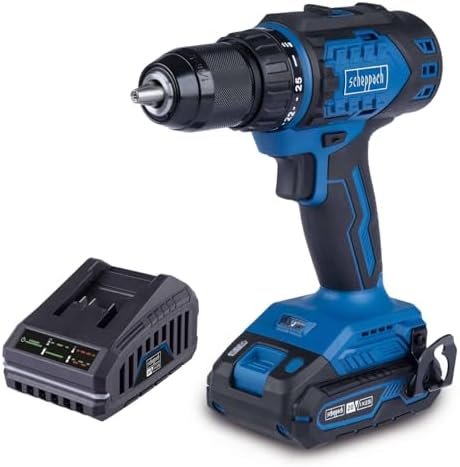
1. Cordless Combi Drill – The Foundation of Every Toolkit
If you only buy one power tool, make it a cordless combi drill.
This single tool performs three essential functions:
- Drill holes
- Drive screws
- Hammer drill into brick and masonry
Whether you’re hanging shelves, assembling furniture, fixing curtain rails or installing TV brackets, a combi drill quickly becomes the most frequently used tool in your home.
Ideal Features
✔ Brushless motor
✔ 18V battery platform
✔ Variable speed trigger
✔ Hammer mode
✔ Metal chuck
✔ LED work light
✔ Belt clip
Best Projects
- Flat-pack furniture
- Kitchen fitting
- Wardrobes
- Shelving
- TV installation
- Garden fencing
- Brick drilling
2. Impact Driver – Small Tool, Incredible Power
Many first-time DIYers confuse an impact driver with a drill.
Although they look similar, they perform very different jobs.
A drill rotates.
An impact driver rotates while delivering rapid bursts of rotational force.
This makes driving long screws dramatically easier.
Instead of struggling with resistance, the impact mechanism provides extra torque automatically.
Perfect For
- Timber framing
- Decking
- Pergolas
- Fence construction
- Roofing
- Structural screws
Because impact drivers produce very little kickback, they’re also easier on your wrists during long projects.
3. Oscillating Multi-Tool – The DIY Problem Solver
Few tools are as versatile as an oscillating multi-tool.
Instead of spinning like a saw, it vibrates rapidly through tiny movements.
This allows precise cuts where larger tools simply won’t fit.
A quality multi-tool can:
- Trim skirting boards
- Cut pipes
- Remove grout
- Sand corners
- Cut plasterboard
- Remove flooring adhesive
- Trim door frames
Many experienced DIYers describe it as the tool they never knew they needed—until they owned one.
4. Circular Saw
When projects involve cutting large timber sheets, nothing beats a circular saw.
Compared to hand saws, cuts are:
- Faster
- Straighter
- Cleaner
- Less tiring
Ideal materials include:
- Plywood
- MDF
- OSB
- Timber
- Decking boards
Always use sharp blades appropriate for the material.
5. Jigsaw
While circular saws excel at straight cuts, jigsaws specialise in curves.
Perfect for:
- Kitchen worktops
- Decorative timber
- Curved shelving
- Laminate flooring
- Plastic
- Aluminium
Modern brushless jigsaws offer impressive accuracy while remaining beginner friendly.
6. Random Orbital Sander
Painting preparation often determines the quality of the finished result.
A random orbital sander removes:
- Old paint
- Surface scratches
- Varnish
- Minor imperfections
while leaving a smooth finish ready for decorating.
Excellent for:
- Furniture restoration
- Doors
- Cabinets
- Staircases
- Garden furniture
7. Angle Grinder
This is one of the most powerful handheld tools available.
It should also be treated with great respect.
Angle grinders can:
- Cut metal
- Remove rust
- Grind welds
- Cut paving slabs
- Sharpen blades
- Strip paint
Because discs rotate at extremely high speeds, proper PPE is absolutely essential.
Choosing Tools Based on Your DIY Projects
Not every homeowner has the same needs.
Buying according to your projects is far more effective than following generic shopping lists.
For First-Time Homeowners
Recommended starter kit:
✔ Combi Drill
✔ Drill Bit Set
✔ Driver Bits
✔ Spirit Level
✔ Tape Measure
✔ Hammer
✔ Multi-tool
This combination handles almost every basic home repair.
For Garden Projects
Ideal tools include:
- Circular saw
- Impact driver
- Combi drill
- Hedge trimmer
- Leaf blower
- Pressure washer
These make fencing, decking and outdoor maintenance significantly easier.
For Renovation Projects
Consider adding:
- SDS hammer drill
- Multi-tool
- Mitre saw
- Angle grinder
- Orbital sander
- Work light
For Furniture Builders
Focus on precision rather than raw power.
Recommended:
- Drill Driver
- Impact Driver
- Jigsaw
- Orbital Sander
- Pocket Hole Jig
Best Power Tool Brands in the UK
The UK market is filled with excellent manufacturers.
Each serves a slightly different audience.
DeWalt
Best for:
- Serious DIY
- Trade professionals
- Long-term investment
Strengths:
- Excellent battery ecosystem
- Powerful brushless motors
- Huge range of compatible tools
Ideal if you’re planning to build a workshop over several years.
Makita
Known for:
- Outstanding reliability
- Smooth operation
- Lightweight design
Popular among:
- Carpenters
- Kitchen fitters
- Joiners
One of the largest cordless ecosystems available.
Bosch Professional (Blue)
Excellent for:
- Precision work
- Engineering
- Home renovation
Strengths:
- Innovative features
- Ergonomic design
- Excellent batteries
Do not confuse Bosch Professional with Bosch Green DIY products—they target different users.
Milwaukee
Premium performance.
Famous for:
- Exceptional torque
- Heavy-duty construction
- Advanced electronics
Typically aimed at professionals, although enthusiastic DIY users increasingly choose Milwaukee for long-term reliability.
Ryobi
Perhaps the best value ecosystem for homeowners.
Advantages include:
- Huge One+ battery range
- Affordable expansion
- Garden equipment compatibility
Excellent choice for families maintaining both house and garden.
Einhell
A growing favourite in the UK.
Offers:
- Good value
- Expanding battery platform
- Beginner-friendly pricing
Perfect for homeowners starting from scratch.
Budget vs Premium Power Tools
Higher prices don’t always mean better value.
The key is buying according to expected usage.
| Feature | Budget Tool | Premium Tool |
|---|---|---|
| Motor | Brushed | Brushless |
| Runtime | Average | Excellent |
| Warranty | 1–2 Years | Up to 3+ Years (registration may apply) |
| Battery System | Limited | Large ecosystem |
| Build Quality | Basic | Professional |
| Repairability | Limited | Better support |
| Weight | Often heavier | Better balanced |
If you only complete occasional DIY tasks, a quality mid-range tool may be all you ever need.
However, frequent users usually recover the extra investment through improved performance and durability.
Essential Accessories Worth Buying
Many people spend hundreds on tools but overlook accessories.
In reality, good accessories often improve results more than buying a more expensive machine.
Recommended additions include:
✔ High-quality drill bits
✔ Driver bit set
✔ Magnetic bit holder
✔ Clamps
✔ Speed square
✔ Safety glasses
✔ Ear defenders
✔ Dust masks
✔ Knee pads
✔ Tool organiser
Power Tool Safety Essentials
Power tools make projects faster, but they also demand respect.
Always wear appropriate Personal Protective Equipment (PPE):
- Safety glasses
- Hearing protection
- Protective gloves where suitable
- Dust mask or respirator
- Safety footwear
Before starting any project:
- Check the tool for damage.
- Secure the workpiece with clamps.
- Remove loose clothing and jewellery.
- Tie back long hair.
- Ensure adequate lighting and ventilation.
- Read the manufacturer’s instructions, especially when using a tool for the first time.
Never remove factory-fitted safety guards or operate tools with damaged cables, batteries or switches.
Keeping Your Power Tools in Excellent Condition
Quality tools can last many years with proper care.
Follow these simple habits:
After Every Use
- Brush away dust and debris.
- Wipe the tool with a dry cloth.
- Inspect the power cable or battery connection.
- Store batteries indoors away from extreme temperatures.
Every Few Months
- Check moving parts for wear.
- Tighten loose screws.
- Clean ventilation slots.
- Replace worn blades or drill bits.
- Inspect battery contacts.
Avoid storing batteries fully discharged for long periods, as this can shorten their lifespan.
Common Mistakes First-Time Buyers Make
Learning from others’ mistakes can save both money and frustration.
Here are some of the most common pitfalls:
Buying Based on Price Alone
The cheapest option often becomes the most expensive when it fails early or lacks replacement batteries.
Ignoring the Battery Platform
Switching brands later usually means replacing chargers and batteries, increasing long-term costs.
Choosing the Wrong Tool for the Job
Using a drill where an impact driver is better—or vice versa—can reduce efficiency and damage fixings.
Buying Oversized Tools
Heavy, high-powered tools aren’t always the best choice. Comfort and control are just as important, especially for regular DIY tasks.
Neglecting Safety Equipment
Skipping eye or hearing protection is never worth the risk. Good PPE is a small investment compared to the cost of an injury.
The Future of Power Tools: Smarter, Safer and More Connected
Power tools have evolved dramatically over the past decade, and the pace of innovation shows no signs of slowing down. While today’s cordless brushless tools already offer exceptional performance, the next generation is becoming increasingly intelligent.
Manufacturers are investing heavily in digital technologies that improve safety, extend battery life, and help users work more efficiently. Features that were once exclusive to industrial equipment are gradually becoming available to homeowners and DIY enthusiasts.
Some of the latest developments include:
- Bluetooth connectivity for tool tracking
- Mobile apps for battery monitoring
- Electronic torque adjustment
- Anti-kickback sensors
- Automatic overload protection
- GPS location tracking for expensive tools
- Smart battery diagnostics
- Cloud-based fleet management for professionals
Although many of these innovations are aimed at trade users, homeowners are beginning to benefit from smarter, safer, and more reliable equipment.
At Elemon.co.uk, we expect connected tools to become increasingly common over the next few years, making DIY more accessible and reducing costly mistakes.
Building Your Workshop Over Time
One of the smartest approaches to buying power tools is to think long term.
Rather than purchasing a large kit filled with tools you’ll rarely use, build your workshop step by step.
A sensible upgrade path might look like this:
Stage 1 – Essential Starter Kit
- Cordless Combi Drill
- Tape Measure
- Spirit Level
- Screwdriver Set
- Hammer
- Drill Bits
Ideal for:
- Flat-pack furniture
- Hanging shelves
- Basic home repairs
Stage 2 – Expanding Your DIY Skills
Add:
- Impact Driver
- Multi-tool
- Orbital Sander
- Circular Saw
Suitable for:
- Decking
- Flooring
- Garden projects
- Kitchen improvements
Stage 3 – Advanced Home Renovation
Expand with:
- Mitre Saw
- Angle Grinder
- SDS Hammer Drill
- Work Lights
- Wet & Dry Vacuum
- Router
Perfect for:
- Extensions
- Garage conversions
- Structural timber work
- Landscaping
Growing your collection this way helps spread costs while ensuring every purchase has a purpose.
Sustainable DIY and Battery Recycling
As cordless tools become more popular, responsible battery disposal is increasingly important.
Lithium-ion batteries contain valuable materials that should never be placed in household waste bins.
Instead:
- Recycle batteries at authorised collection points.
- Return damaged batteries to participating retailers where available.
- Store unused batteries in a cool, dry place.
- Avoid exposing batteries to excessive heat or moisture.
- Inspect batteries regularly for swelling, cracks, or damage.
Extending the life of your batteries through proper charging and storage not only saves money but also reduces environmental impact.
Choosing the Right Tool for Different DIY Jobs
| DIY Project | Recommended Tool |
|---|---|
| Hanging Pictures | Drill Driver |
| Curtain Rails | Combi Drill |
| TV Wall Mount | Combi Drill with Masonry Bits |
| Flat-Pack Furniture | Drill Driver |
| Decking | Impact Driver |
| Fence Repairs | Combi Drill + Impact Driver |
| Kitchen Cabinets | Drill Driver |
| Laminate Flooring | Jigsaw + Multi-tool |
| Garden Shed | Circular Saw + Impact Driver |
| Brick Drilling | Hammer Combi Drill or SDS Drill |
Using the correct tool not only improves results but also increases safety and reduces wear on equipment.
Quick Power Tool Buying Checklist
Before making your purchase, ask yourself the following:
✅ Does it suit the type of projects I regularly complete?
✅ Am I buying into a battery platform with room to expand?
✅ Is the motor brushless?
✅ Are spare batteries readily available in the UK?
✅ Is the tool comfortable to hold?
✅ Does it include a manufacturer’s warranty?
✅ Can I buy bare tools later?
✅ Is it compatible with other garden or workshop equipment?
If you answer “yes” to most of these questions, you’re likely making a solid long-term investment.
Frequently Asked Questions
Should I buy corded or cordless tools?
For most UK homeowners, cordless tools offer the best combination of convenience and performance. Corded tools remain ideal for heavy-duty workshop equipment and continuous use.
Are brushless motors really worth the extra cost?
Yes. Brushless motors are generally more efficient, produce less heat, require less maintenance, and often provide longer battery runtime. For regular DIY use, the additional investment is usually worthwhile.
Is an 18V system enough for home DIY?
Absolutely. An 18V platform is the preferred choice for most homeowners because it balances power, portability, and a wide range of compatible tools.
How many batteries should I own?
For most users, two batteries are sufficient—one in use while the other is charging. Larger projects may benefit from a third battery to minimise downtime.
Can batteries from different brands be mixed?
In most cases, no. Battery systems are manufacturer-specific, so it’s important to choose a platform you’re happy to invest in over the long term.
Key Takeaways
- Choose tools based on the projects you actually plan to complete.
- Invest in a reliable battery platform that can grow with your workshop.
- Brushless motors offer better performance and longer service life.
- A cordless combi drill is the foundation of every DIY toolkit.
- Buy quality accessories alongside your tools for the best results.
- Always use appropriate PPE and follow manufacturer safety guidance.
- Maintain your tools regularly to maximise performance and lifespan.
- Build your collection gradually rather than buying everything at once.
My Final Thoughts
Over the years, I’ve come to appreciate that good tools do more than simply make jobs easier—they build confidence. Every successful repair, home improvement project, or garden upgrade starts with equipment you can rely on.
While it’s tempting to chase the lowest prices or the biggest specification sheet, the smartest investment is often the one that suits your needs today while leaving room to grow tomorrow. A dependable battery platform, a well-built brushless drill, and a handful of quality accessories will take most homeowners much further than an oversized toolkit filled with tools they’ll rarely use.
At Elemon.co.uk, our aim is to help readers make informed purchasing decisions that deliver genuine long-term value. Whether you’re tackling your very first DIY project or expanding a well-equipped workshop, choosing wisely now can save time, money, and frustration for years to come.
Remember, every expert started with a single tool. The key is building your collection with purpose.
Related Articles on Elemon.co.uk
Continue your DIY and smart home journey with these helpful guides:
- Best Cordless Drills in the UK (2026 Review)
- Best DIY Tool Kits for Beginners
- Best Angle Grinders for Home Projects
- Best Laser Levels for Accurate DIY Builds
- Best Pressure Washers for Home Use
- DIY vs Hiring a Pro: When to Save Money and When Not To
- Best Tools Under £100 (UK Edition)
- Smart Home Starter Kits for Beginners
- Best Smart Plugs and How to Use Them
- The Smart Shopper’s Guide to Buying Tech in the UK
UK Regulations & Safety Information
Power tools sold in the UK should comply with relevant safety standards and carry the UKCA or CE marking where applicable. Always purchase tools from reputable retailers and follow the manufacturer’s operating instructions.
When carrying out electrical work, structural alterations, or projects involving gas installations, ensure you comply with applicable UK Building Regulations. If you are unsure about any aspect of a project, consult a qualified professional.
Always disconnect tools from the power source or remove the battery before changing accessories, performing maintenance, or cleaning.
Disclaimer
This article is provided for general informational and educational purposes only. While every effort has been made to ensure the accuracy of the information at the time of publication, product specifications, availability, pricing, and manufacturer features may change over time.
Readers should always follow manufacturer instructions, wear appropriate personal protective equipment (PPE), and assess whether a project is suitable for their level of experience. Elemon.co.uk accepts no liability for injury, damage, or loss arising from the use of information contained within this article.
Affiliate Disclaimer: As an Amazon Associate, Elemon.co.uk may earn from qualifying purchases. This comes at no additional cost to you and helps support our independent reviews and free DIY guides.