

My Experience Building a Raised Garden Bed
When I decided to start growing more vegetables at home, I quickly discovered that many raised garden bed kits cost far more than I wanted to spend. Rather than buying a pre-made kit, I built my own using basic timber, a handful of screws, and a free afternoon.
The result was a sturdy 1.8m x 0.9m raised bed that cost less than £50 to build and has provided several growing seasons of vegetables and herbs. In this guide, I’ll walk through the exact process I used, the materials I bought, and a few lessons I learned along the way.
How to Build a Raised Garden Bed for Under £50
Creating a raised garden bed is one of the most affordable ways to improve your garden’s productivity. Whether you’re growing herbs, vegetables, or flowers, a simple timber raised bed provides better soil control, improved drainage, and easier maintenance—all without spending a fortune.
With a few basic materials and a couple of hours of work, you can build a durable 1.8m x 0.9m raised bed for less than £50.
Why Choose a Raised Bed?
Raised beds offer several advantages over traditional ground planting:
- Better drainage during wet weather
- Improved soil quality and fertility
- Reduced weed growth
- Easier access for planting and harvesting
- A neat, professional appearance in any garden
A 1.8m x 0.9m bed is particularly practical because most gardeners can comfortably reach the centre from either side without stepping on the soil.
Materials & Budget
| Material | Quantity | Approx. Cost |
|---|---|---|
| Treated softwood boards (47mm x 100mm x 2.4m) | 5 | £25 |
| Timber corner posts (50mm x 50mm) | 1 length | £4-£5 |
| Exterior wood screws | 1 pack | £5 |
| Cardboard or newspaper | As needed | Free |
| Estimated Total | £35-£45 |
Timber Safety
Most modern pressure-treated timber sold in the UK uses copper-based preservatives and is suitable for garden projects. If preferred, you can add a protective liner to the inside of the bed to reduce direct contact between soil and timber.
Tools Required
- Tape measure
- Pencil
- Hand saw or mitre saw
- Drill/driver
- Wood drill bit
- Spirit level
- Rubber mallet or hammer
Step 1: Cut the Timber
Cut the boards into the following lengths:
- 3 pieces at 1.8m
- 4 pieces at 0.9m
Next, cut the corner post into four sections approximately 45cm long.
These posts will strengthen the corners and provide anchors that can be driven into the ground.
Step 2: Prepare the Site
Choose a location that receives plenty of sunlight throughout the day.
Remove large stones, weeds, and any uneven patches of ground. Spend a few minutes levelling the area as much as possible to ensure the finished bed sits square and drains evenly.
Step 3: Build the End Sections
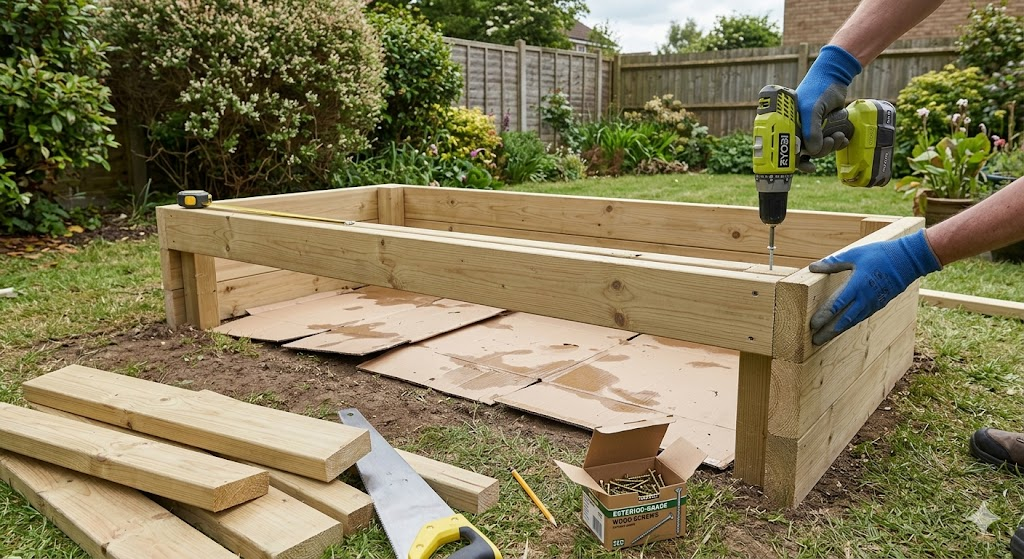
Lay two corner posts on a flat surface.
Position two 0.9m boards across them, one above the other, creating a wall approximately 20cm high.
Pre-drill pilot holes to prevent splitting and secure the boards with exterior-grade screws.
Repeat the process for the second end panel.
Step 4: Connect the Long Sides
Stand both end panels upright.
Attach the 1.8m boards between them, fixing directly into the corner posts. Work methodically and check that the frame remains square as you build.
Once complete, you should have a strong rectangular structure.
Step 5: Position and Level the Bed
Move the frame into its final location.
Use a mallet to gently drive the corner stakes into the ground until the bed feels stable. Check all sides with a spirit level and make any necessary adjustments before filling.
Filling the Bed Without Breaking the Budget
The biggest expense of many raised beds isn’t the timber—it’s the compost.
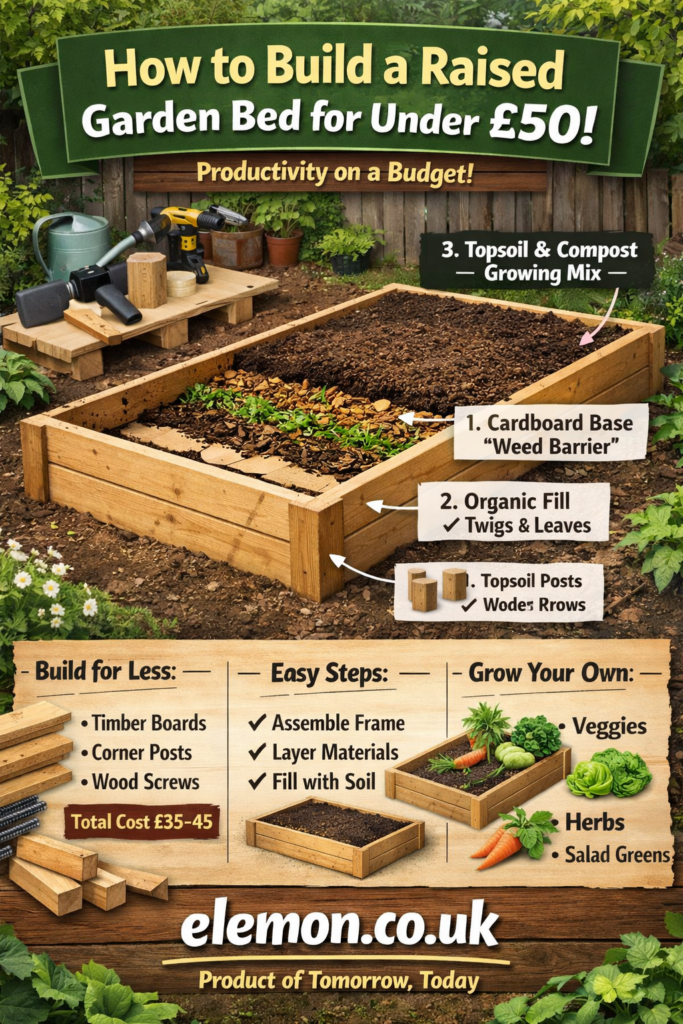
A smart way to save money is to fill the lower portion of the bed with free organic material before adding your growing mix.
Layer 1: Weed Barrier
Place cardboard or several layers of newspaper over the ground inside the bed.
Water thoroughly to help it settle and begin decomposing.
Layer 2: Organic Filler
Add:
- Small branches
- Twigs
- Dry leaves
- Grass clippings
- Garden prunings
These materials gradually break down over time, improving soil structure and releasing nutrients.
Layer 3: Growing Medium
Fill the top 15-20cm with a mixture of:
- Topsoil
- Multi-purpose compost
- Well-rotted organic matter
This creates a nutrient-rich planting zone where roots can establish quickly.
Best Crops for a New Raised Bed
Your new bed is ideal for:
- Lettuce and salad leaves
- Spinach
- Carrots
- Beetroot
- Radishes
- Spring onions
- Herbs such as parsley, thyme, and basil
These crops thrive in the loose, well-drained soil that raised beds provide.
Final Thoughts
For less than £50, a simple timber raised bed can transform an unused corner of your garden into a productive growing space. By using reclaimed organic material to fill the base and reserving purchased compost for the top layer, you can keep costs low while creating excellent growing conditions.
A well-built raised bed should provide many years of harvests and can easily be expanded into a larger kitchen garden as your growing ambitions increase.
Product of Tomorrow, Today — Elemon.co.uk
Author’s Note: This project is based on my own experience building and maintaining raised garden beds in a UK garden. Costs and materials may vary depending on your location and supplier prices.
When working with power tools, always wear appropriate eye protection and follow the manufacturer’s safety instructions. Before purchasing timber, ensure it is suitable for outdoor use and sourced from reputable suppliers. If growing edible crops, use modern pressure-treated timber or line the bed appropriately according to current UK gardening guidance. Always dispose of timber offcuts and construction waste responsibly in accordance with local council regulations.
Where to buy Timber & Screws
| Item | Example Product | Approx. Price | Retailer |
|---|---|---|---|
| Treated softwood boards | 47 mm × 100 mm × 2.4 m boards | £25–£30 | Wickes, B&Q, Travis Perkins |
| Corner posts | 50 mm × 50 mm timber posts | £4–£5 | Wickes, B&Q |
| Exterior wood screws | TIMCO Timber Screw (Box of 50) | £11.62 | Amazon UK |
| Decking screws alternative | IN‑DEX External Decking Screws | £5.21 | eBay UK |
| Rust‑resistant screws | Carpenters Mate Exterior Screws | £11.02 | AWBS Ltd |
UK Safety, Planning & Construction Disclaimer
The information in this article is provided for general educational and informational purposes only. Building regulations, planning requirements, and property restrictions may vary depending on your location within the United Kingdom.
Before beginning any construction project, always:
- Verify current planning and permitted development rules with your local authority.
- Check for underground services, including electrical cables, water pipes, and drainage systems.
- Follow manufacturer instructions for all tools, fixings, and construction materials.
- Use appropriate personal protective equipment (PPE).
- Consult a qualified professional where structural safety is uncertain.
Elemon.co.uk accepts no responsibility for loss, damage, injury, or costs arising from the use of information contained within this guide. Homeowners remain responsible for ensuring all work complies with applicable UK regulations and health and safety requirements.
Disclosure: This article may contain affiliate links. If you purchase through these links, Elemon.co.uk may earn a commission at no extra cost to you.