
Need extra storage Cabinet but don’t want to invest in a workshop full of expensive equipment? This simple cabinet project is designed for homeowners, renters, and DIY beginners who want a sturdy storage solution using readily available materials and only a handful of essential tools.
The design focuses on simplicity, affordability, and ease of construction. Using standard sheet materials and basic timber, you can build a versatile cabinet that works equally well in a utility room, garage, home office, workshop, or spare bedroom.
Why This Project Works for Beginners
Many cabinet-building tutorials assume access to specialist woodworking tools, but this design keeps things straightforward. There are no complicated joinery techniques, intricate cuts, or advanced machinery required.
By using shelf battens for support and simple screw-and-glue construction, you can achieve excellent strength without needing years of woodworking experience.
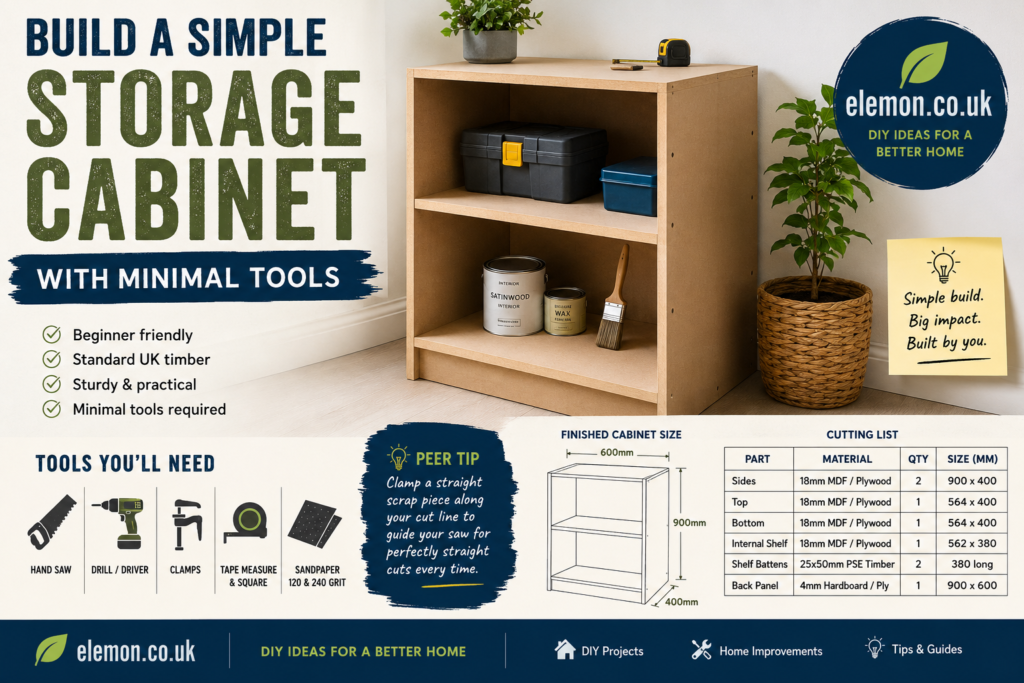
Essential Tools You’ll Need
Before getting started, gather the following tools:
Hand Saw
A sharp fine-tooth saw will help you make clean, accurate cuts if your timber supplier doesn’t offer a cutting service.
Cordless Drill Driver
You’ll use this for drilling pilot holes and driving screws during assembly.
Clamps
Corner clamps or standard woodworking clamps help keep everything aligned while fixing panels together.
Tape Measure and Square
Accurate measurements and square corners are crucial for a professional-looking result.
Sandpaper
Use 120-grit for initial smoothing and 240-grit for finishing surfaces before painting.
Materials Required
The cabinet is built primarily from 18mm plywood or MDF, both of which are widely available throughout the UK.
Finished Cabinet Size
- Height: 900mm
- Width: 600mm
- Depth: 400mm
Cutting List
| Component | Material | Quantity | Size |
|---|---|---|---|
| Side Panels | 18mm MDF or Plywood | 2 | 900mm × 400mm |
| Top Panel | 18mm MDF or Plywood | 1 | 564mm × 400mm |
| Bottom Panel | 18mm MDF or Plywood | 1 | 564mm × 400mm |
| Internal Shelf | 18mm MDF or Plywood | 1 | 562mm × 380mm |
| Shelf Battens | 25mm × 50mm PSE Timber | 2 | 380mm |
| Back Panel | 4mm Hardboard or Ply | 1 | 900mm × 600mm |
Money-Saving Tip: Many DIY stores will cut sheet materials to size for a small fee, saving time and improving accuracy.
Step 1: Prepare All Components
Begin by inspecting each panel and lightly sanding all exposed edges. This removes splinters, softens sharp corners, and creates a better surface for painting or finishing later.
Taking a few extra minutes here can significantly improve the final appearance of the cabinet.
Step 2: Assemble the Main Cabinet Frame
Position the two side panels upright.
The top and bottom panels fit between the sides, creating a strong box structure.
For the bottom panel, measure approximately 50mm from the base of each side panel and mark a reference line. This recessed position creates a neat plinth effect and improves stability.
Apply wood glue to the mating surfaces, clamp the pieces together, and drill pilot holes through the side panels before driving in 50mm wood screws.
Repeat the process for the top panel.
Once complete, you’ll have a rigid rectangular frame.
Step 3: Install the Shelf Supports
Choose the height for your internal shelf based on how you plan to use the cabinet.
Position one timber batten on each side panel, ensuring both are level with one another.
Secure the battens using screws driven through the cabinet sides.
These supports will carry the weight of the shelf and any stored items, providing a simple yet highly effective shelving system.
Step 4: Square the Cabinet and Fit the Back
Lay the cabinet face down on a flat surface.
Place the back panel over the rear opening and check that the cabinet is perfectly square by measuring diagonally from corner to corner. Both measurements should match.
If necessary, gently adjust the frame until it is square.
Fix the back panel using panel pins or short screws at approximately 150mm intervals around the edges.
This step is particularly important because the back panel prevents the cabinet from twisting or wobbling during use.
Step 5: Fit the Shelf
Stand the cabinet upright and place the shelf onto the battens.
The shelf should slide into position easily while still fitting snugly.
If desired, add a few screws through the shelf into the battens for additional strength, particularly if the cabinet will store heavier items.
Step 6: Finishing Touches
For a cleaner appearance:
- Fill visible screw holes with wood filler.
- Allow the filler to dry completely.
- Sand smooth with fine-grit sandpaper.
- Apply primer and paint, or finish with a clear varnish.
A satin furniture paint provides a durable finish that’s easy to clean and suitable for most rooms in the home.
Optional Upgrades
Once the basic cabinet is complete, consider adding:
- Adjustable shelves
- Soft-close doors
- Decorative handles
- Castor wheels
- Internal storage baskets
- LED strip lighting
These upgrades can transform a simple storage cabinet into a highly functional piece of furniture tailored to your needs.
Final Thoughts
This cabinet proves that practical storage doesn’t require expensive equipment or advanced woodworking skills. With a few basic tools, standard materials, and a free afternoon, you can build a durable storage unit that looks great and provides years of service.
Whether you’re organising a garage, tidying a utility room, or creating additional office storage, this beginner-friendly project is an excellent introduction to furniture building.
My Experience
I’ve built several storage cabinets over the years, ranging from simple garage shelving units to fitted storage for utility rooms and workshops. One lesson I’ve learned is that you don’t need expensive woodworking machinery to build practical and attractive furniture. For this project, the biggest time-saver is having the timber merchant cut the sheet material to size before bringing it home.
I’ve also found that taking extra time to ensure the cabinet is perfectly square before fixing the back panel makes a huge difference to the finished result. A well-built cabinet should feel solid, stable, and capable of handling everyday use for many years.
For beginners, this project is an excellent introduction to woodworking because it teaches measuring, drilling, assembling, and finishing techniques without becoming overly complicated.
Key Takeaways
✔ Build a Simple Storage Cabinet using only basic DIY tools.
✔ Standard UK timber and sheet materials keep costs affordable.
✔ The project is suitable for beginners with little woodworking experience.
✔ A back panel is essential for strength and preventing cabinet movement.
✔ DIY cabinets can be customised with doors, wheels, additional shelves, or paint finishes.
✔ Most DIY stores can cut materials to size, making the project even easier.
✔ Perfect for garages, workshops, utility rooms, home offices, and general household storage.
Related Articles
You may also find these guides useful:
- DIY Smart Home Wall Panel (LED + Acoustic Foam)
- How to Build Heavy-Duty Floating Shelves
- Smart Home Starter Kits for UK Homes
- DIY Outdoor Solar Lighting Guide
- Building a Modern Pergola: A DIY Guide
- Raised Garden Bed Construction for Beginners
- The Smart Shopper’s Guide to Buying Tech and Smart Home Gear in the UK
UK Regulations & Safety Information
This project is intended for general household storage purposes. Before starting, ensure that all tools are used according to the manufacturer’s instructions and wear appropriate personal protective equipment (PPE), including safety glasses, hearing protection where required, and a dust mask when cutting or sanding MDF.
When working with MDF, ensure good ventilation and minimise dust exposure. MDF dust can be harmful if inhaled over prolonged periods.
If the cabinet will be installed in homes with children, consider securing it to the wall using appropriate anti-tip fixings. For garages and workshops, avoid storing hazardous chemicals, fuels, or flammable materials unless suitable storage requirements are met.
Always follow current UK health and safety guidance and local building regulations where applicable.
Disclaimer
This article is provided for informational and educational purposes only. While every effort has been made to ensure accuracy, Elemon.co.uk accepts no responsibility for injuries, damages, losses, or errors resulting from the use of information contained within this guide.
Readers are responsible for assessing their own skills, tools, materials, and working environment before undertaking any DIY project. If in doubt, consult a qualified professional.
As an Amazon Associate, Elemon.co.uk earns from qualifying purchases at no extra cost to you.
Image Disclaimer
All images used in this article are for reference and illustrative purposes only. Actual materials, dimensions, colours, finishes, and construction methods may vary depending on available products, manufacturer specifications, and individual project requirements.